UAE ‘surpassing Hong Kong’, challenging Singapore for global trade crown
SOUTH CHINA MORNING POST
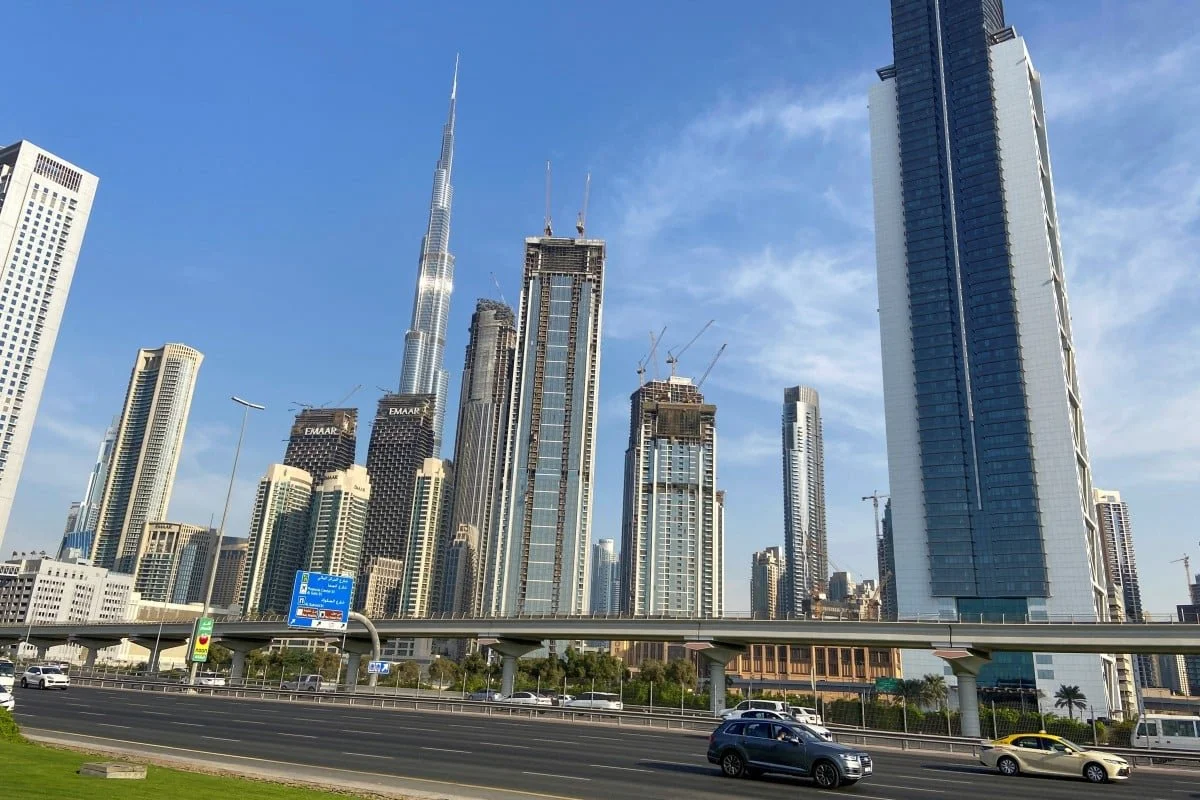
The United Arab Emirates is rapidly eclipsing Hong Kong and emerging as a credible rival to Singapore as Asia’s most dynamic trading hub, thanks to an ambitious post-pandemic campaign of economic diplomacy.
Defying global headwinds from war and instability across its own region, the UAE’s non-oil trade almost doubled between 2021 and 2025 to reach 3.8 trillion dirhams (US$1.03 trillion), Prime Minister Mohammed bin Rashid al-Maktoum announced on January 31.
That surge – powered by an aggressive outreach to emerging markets and strategic investment in logistics – has already fulfilled 95 per cent of targets once set for 2031, according to Maktoum, who is also the UAE’s vice-president and ruler of Dubai, the most populous emirate.
…
Analysts see in this duality the essence of the UAE’s appeal: a blend of openness, pragmatism and assertiveness that has made it indispensable to trade flows.
Since independence in 1971, it has opted to embed itself within the global system rather than challenge it. By projecting reliability, the country has won the trust of major powers – and with it, a central role in connecting markets, capital and logistics routes across continents.
This reflected “how it positioned itself within the international system from the outset”, said Guy Burton, a Brussels-based academic focused on great power competition in the Middle East.
…
The country’s geopolitical influence “has generally been exercised in ways designed not to alienate partners or appear radically revisionist”, Burton said.
Still, it has shown a more assertive streak since the Arab spring uprisings of the early 2010s, deploying influence – and, at times, force – across the region in pursuit of strategic stability.
The UAE’s involvement in Yemen, Libya and Sudan demonstrated a “greater willingness to act assertively”, Burton said, though he added that such actions were “calibrated, with the leadership seeking to bring regional and international partners along rather than overturn the system”.
However, with its economic footprint now spanning ports, energy, technology and renewables, the UAE is encountering new scrutiny.
Burton warned that as its global network expands, its investments “will increasingly be interpreted geopolitically”. Accusations of “weaponising interdependence are likely to grow, even when decisions are commercially driven”, he added.
Navigating that tension would test the UAE’s finely honed pragmatism, Burton said. In that sense, it might once again act as a first mover, “adapting early to a world where economic power and political influence are more tightly intertwined”.
…
TO READ THE ARTICLE [PAYWALL], CLICK HERE.
